
Sandwich 101: Italian Cured Meats
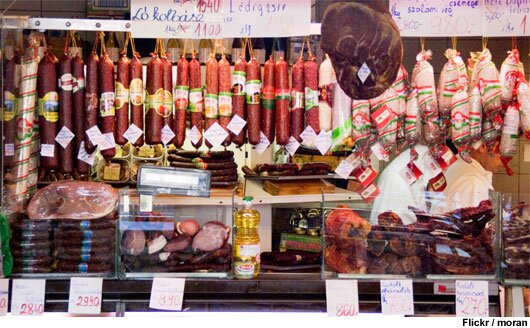
One of our favorite Italian-Americans and an expert on Italian meats, Giulia Umile, educates us on the nuances of Italian cured pork.
Domestic Prosciutto
Curing ham is an art involving only a few different elements: salting, temperature and time. For twelve months, artisans move the hams from room to room in the curing facility so that different temperatures and humidities can play their part in the curing process. A truly versatile food, Prosciutto can be used virtually anywhere; from cooked dishes to antipasto to an elegant snack. It pairs well with crusty bread, peppers, olives and sharp cheeses.
Prosciutto Di Parma
From the regions of Parma and Langhirano of Emilia-Romagna and one of Italy’s finest foods. Aged for over twelve months, Prosciutto di Parma contains only 2 ingredients; pork and sea salt. The special curing process is what gives this meat its outstanding flavors and texture. Passed down for generations and made under strict quality conditions, the tradition and skill of curing this ham consists of hand rubbing each leg of pork with a precise amount of sea salt to make sure the cure is ideal. The prosciutto then moves from curing room to curing room, each with different temperatures and humidity settings to moderate the curing process.
Genoa Salami-Artificial Casing and Natural Casing
Named after Genoa, the city in which it was born. A fine textured pork sausage full of garlic and spices that is arguably the most popular variety of Italian dried sausage in the US. It is typically aged for over 3 months, during which time a cord is wrapped lengthwise around the sausage at regular intervals to form its shape.
Hot Capicola
Capicola is a traditional sausage produced in a number of regions of Italy. It’s made exclusively from the pork butt, which is aged for a minimum of thirty days in brine before being packed into a casing, where it is cooked and further aged to allow the flavor to develop. Hot Capicola is typically seasoned with crushed red hot peppers, salt and garlic to complement the rich flavor of the pork with a spicy hot accent. Hot Capicola can be paired with Italian bread and provolone to make an authentic Italian sandwich.
Sweet & Hot Sopressata
This typical Salami, characterized by a distinctive flavor, was traditionally produced for centuries in the Southern Italian old-country farmhouses and villages (originated in Calabria). It is made of coarse-ground pork, so it has a different texture and flavor than the more widely known, finer-ground salamis. Sweet Sopressata is seasoned with garlic, salt and black pepper, and cured up to nine months in a natural casing. Hot sopressata is made in the same method, however spicy hot peppers are added before the curing process for that extra kick and red color throughout the sausage.
Mortadella
Originating in Bologna (nickname “la grassa”, which means fat), Mortadella is made of finely ground pork mixed together with cubes of high quality pork fat (from the throat) and sometimes pistachios or pine nuts. It gets its name from the Roman word for “mortar”; in ancient times, a mortar and pestle were often used to grind meats, fruits, and grains. These ingredients are combined in casing and hung to slowly cook in brick ovens for up to 24 hours. Mortadella is best enjoyed with an excellent piece of Italian bread, and not much else.
Pancetta
Often called Italian bacon-however unlike American bacon- pancetta is not smoked, but rather is cured with a variety of spices, herbs, and garlic. Pancetta is usually rolled and tied in a cylindrical shape, then hung to dry. Pancetta that is made in Florence, however, is left flat.
Bresaola
The leanest of the Italian cured meats, bresaola is salted and air-dried beef from the tenderloin or fillet. It is dried for up to three months, and when finished is a deep ruby-red color. Unlike other Italian meats, there is very little visible fat.
–
What makes me an expert?
1. First generation American; both parents were born in Abruzzi and moved to the US during their teen years.
2. Raised in a family rich in Italian culture; I’ve spoken both languages since I was 3.
3. My father owned a salumeria in West Philadelphia the majority of my life, and specialized in Italian meats and cheeses. He also owned an authentic Italian café across the street, where he served amazing Italian coffees and gelato.
4. We cured our own salami in the basement of our West Philadelphia row home.
5. My name is Giulia Umile. Enough said. If I was a boy, my name would have been Umberto.
If you enjoyed this post, please leave a comment or subscribe to the feed to get future articles delivered to your feed reader.
-
http://sandwichloversclub.blogspot.com jake
-
http://sandwichloversclub.blogspot.com jake
-
Frank
-
Gabriel
-
JBR
-
Paterdomb7
-
Vonspasm
- The Cheesesteak Pretzel: As Philly As It Gets!
- Horizons’ Vegan Banh Mi Sliders
- Exclusive: Steve Poses Opening Burger Stand On The Parkway, Help Pick The Logo And Win Lunch!
- Twenty Manning Fires Up The Grill
- Mémé’s Moroccan-Inspired Kefta Burger
- Vonspasm: I love delicatessens, no matter where they are. It...
- England Furniture: Thanks for sharing this video of some of the great...
- Remo: The ZEP was truly a classic in Norristown and has ...
- Remo: niceu00a0 but not a true ZEP...
- Remo: what planet are you from?...

Latest Flickr photos

By: Jeff Vogel, posted Mar 18, 2009 at 11:09 am
View Comments