
Metropolitan Bakery: The Perfect Canvas For A Sandwich Artisan
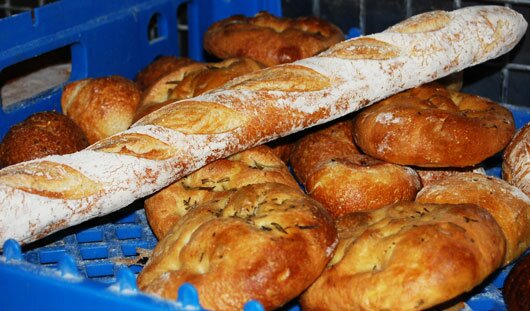
We know that a great sandwich starts with great bread. But what makes great bread different and better than ordinary breads? We asked a true expert: Metropolitan Bakery’s head baker, James Barrett.
The answer is fermentation, and they figured it out hundreds of years ago in Europe. Today, while most commercial bakeries pump out breads at breakneck speeds, Metropolitan takes 48 hours to let the dough rise under unique parameters of time, temperature and fermentation (Barrett’s approach is long, slow and cool.) After spending 8 years as pastry chef at White Dog Café, Barrett developed his sourdough natural starter in 1987 and has kept the cultures alive and active for almost 20 years. He considers himself a vessel for an age-old technique, allowing the natural bacteria and acids in the yeast to impart blisters on the crust. Many bakers seek to avoid such imperfections, but that is exactly what Metropolitan aims for to bring out the flavor of the wheat. Barrett believes their process results in chewier, moister breads with flavorful crusts.
Of course, it also starts with great flours, which the yeast eats three times a day. Sourced primarily from Lindley Mills, an organic miller in North Carolina, the flour comes from Central US wheat fields. Metropolitan uses no additives, fillers or conditioners, and grains and seeds are mixed and roasted by hand.
The French baguette is Metropolitan’s top seller, and always has been. It is perfectly suited for a sandwich like prosciutto, fennel, onions and mustard. The whole wheat sandwich bread is moist, fresh and light; great for a toasted sandwich or panini. The multigrain bread pairs well with cheese and apples; and the nutty, sour, crisp and moist organic miche with rye flour is ideal for a chicken salad sandwich with tarragon mayonnaise. For James Barrett, who prefers sandwiches toasted and pressed, it doesn’t get much better than a Reuben on NY rye – gooey, creamy, crisp and bursting with flavor.
After 15 years, Metropolitan now has 5 retail locations. The Rittenhouse and Reading Terminal Market stores are managed by the company; the University City, Chestnut Hill and Old City (inside Farmicia) locations are managed by licensees. At the University City store, breakfast and lunch sandwiches are made fresh to order. Metropolitan also provides bakery and training for the H.O.M.E. Page Café at the Philadelphia Free Library. Metropolitan breads are available at gourmet markets in the region, and can be found on the menu at restaurants including Rouge, Butcher & Singer and Pumpkin. New cookies and pastry items are introduced frequently, and both breads and pastries change seasonally.
Gallery


Metropolitan Bakery
262 S 19th St., Philadelphia, PA 19103 (Google Map)
If you enjoyed this post, please leave a comment or subscribe to the feed to get future articles delivered to your feed reader.
- The Cheesesteak Pretzel: As Philly As It Gets!
- Horizons’ Vegan Banh Mi Sliders
- Exclusive: Steve Poses Opening Burger Stand On The Parkway, Help Pick The Logo And Win Lunch!
- Twenty Manning Fires Up The Grill
- Mémé’s Moroccan-Inspired Kefta Burger
- aed: Veggies must be always present in our everyday mea...
- Rob: Hey Chach, my pop grew up in and went to Norristow...
- Vonspasm: I love delicatessens, no matter where they are. It...
- England Furniture: Thanks for sharing this video of some of the great...
- Remo: The ZEP was truly a classic in Norristown and has ...

Latest Flickr photos

By: Jeff Vogel, posted Jul 28, 2009 at 9:00 am
View Comments